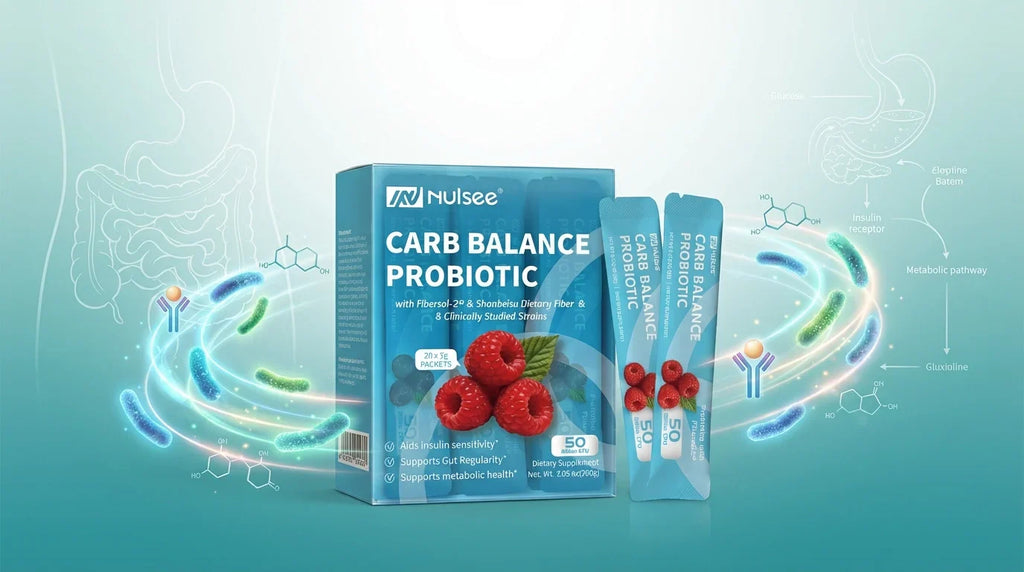
Understanding Synbiotic Labels for Quality Probiotic Fiber Products
You're standing in the supplement aisle, holding two synbiotic bottles with drastically different prices. Both promise gut health support, but one lists "10 billion CFU probiotic blend" while the other specifies "Bifidobacterium lactis HN019." One mentions "prebiotic fiber," the other "patented Fibersol-2." You feel overwhelmed and confused—which one actually works?
Quality synbiotic labels should clearly identify specific probiotic strains with scientific names, list exact CFU counts at expiration, specify the type of prebiotic fiber used, and display third-party testing certifications, rather than hiding behind vague "proprietary blends" or unsubstantiated health claims. Reading labels correctly means understanding that a quality probiotic fiber product prioritizes transparency, clinical evidence, and manufacturing standards over marketing hype.
This article will help you decode synbiotic labels like a nutrition expert, identify quality markers that matter, spot misleading claims, and make confident purchasing decisions for your gut health investment.
What Makes a Quality Synbiotic Different from Regular Probiotics?

A quality synbiotic contains both live probiotics and prebiotic fiber that work synergistically to support your gut microbiome, whereas regular probiotics only provide beneficial bacteria without the fiber substrate needed to nourish them effectively. The 2020 International Scientific Association for Probiotics and Prebiotics (ISAPP) consensus defines synbiotics as "a mixture comprising live microorganisms and substrate(s) selectively utilized by host microorganisms that confers a health benefit on the host."
According to research published in Gut Microbes, synbiotic supplementation produces more favorable immune parameters and microbial diversity compared to probiotics alone. The study demonstrated that eight weeks of synbiotic use significantly reduced inflammatory markers (CRP and IFN-γ) while increasing anti-inflammatory IL-10 by 16% compared to placebo groups.
The Science Behind Synbiotic Formulations
Effective synbiotic formulations require specific probiotic strains paired with compatible prebiotic fibers. Research indicates that pre-screening combinations—such as matching Bifidobacterium animalis with galacto-oligosaccharides (GOS) and xylo-oligosaccharides (XOS)—produces significantly better outcomes than random pairings.
Here's why this matters:
- Selective fermentation: The right prebiotic fiber feeds your chosen probiotic strains preferentially
- Enhanced survival: Prebiotics protect probiotics during digestion, improving viable delivery to the colon
- Synergistic metabolite production: Combined formulas increase beneficial short-chain fatty acid (SCFA) production more than either component alone
According to World Gastroenterology Organisation guidelines, not all probiotic-prebiotic combinations demonstrate synbiotic effects. Quality products conduct pre-clinical testing to verify actual synergistic benefits rather than simply mixing ingredients together.
Why Fiber Matters in Synbiotic Products
Probiotic fiber serves as fuel for beneficial bacteria, extending their colonization time and amplifying their health benefits. Without adequate prebiotic fiber, probiotics may transit through your digestive system without establishing sufficient presence to alter your microbiome composition.
Clinical studies show that soluble corn fiber consumption increases calcium absorption and shifts gut microbiota favorably. One study found that 12 grams daily of soluble corn fiber enhanced beneficial Bifidobacterium populations while improving metabolic markers. This demonstrates why the fiber component in probiotic fiber products isn't just filler—it's essential for probiotic function.
Key Takeaway
Understanding the difference between synbiotics and probiotics empowers you to choose products that deliver both beneficial bacteria and the fiber fuel they need to thrive. Look for products that specify both the probiotic strains and the type of prebiotic fiber, and prioritize formulas backed by pre-screening research demonstrating actual synergistic effects.
| Product Type | Contains Probiotics | Contains Prebiotics | Clinically Tested Combination |
|---|---|---|---|
| Probiotic Only | ✓ | ✗ | N/A |
| Prebiotic Only | ✗ | ✓ | N/A |
| Basic Synbiotic | ✓ | ✓ | Usually No |
| Quality Synbiotic | ✓ | ✓ | Yes |
Quality synbiotics demonstrate pre-clinical evidence that their specific probiotic-prebiotic combination produces enhanced benefits beyond individual components.
How Do You Identify Clinically Studied Probiotic Strains on Labels?

You can identify clinically studied probiotic strains by looking for complete three-part scientific names on product labels—genus, species, and unique strain designation—rather than vague terms like "probiotic blend" or incomplete names like "Lactobacillus species." For example, "Bifidobacterium lactis HN019" provides full identification, while "Bifidobacterium blend" reveals nothing about actual strain identity.
The International Scientific Association for Probiotics and Prebiotics (ISAPP) emphasizes that probiotic effects are strain-specific, not species-specific. Research on Lactobacillus rhamnosus GG cannot be applied to Lactobacillus rhamnosus HN001—they're different strains with different clinical evidence. Quality probiotic fiber labels always include complete strain identifiers.
Reading Genus, Species, and Strain Designations
Complete probiotic identification follows this format: Genus species strain-designation. Understanding each component helps you verify product quality and research backing.
Here's what to look for:
- Genus (capitalized): The broader bacterial family—Lactobacillus, Bifidobacterium, Streptococcus
- Species (lowercase): The specific bacterial type—acidophilus, longum, thermophilus
- Strain designation: The unique identifier—GG, HN019, BB-12, NCFM
According to bucket brigade principle: Without the strain designation, you cannot verify clinical research. Think of it this way—"Honda Civic" tells you the make and model, but the VIN number identifies your specific vehicle with its unique features and history.
Clinical trials demonstrate that Bifidobacterium animalis subsp. lactis MN-Gup with GOS and XOS reduced body fat percentage by 1.26% over 12 weeks in individuals with obesity. This specific combination wouldn't automatically work with a different Bifidobacterium strain—strain identity matters critically.
What CFU Counts Actually Mean for Effectiveness
CFU (Colony Forming Units) represents the number of viable, living probiotic cells capable of multiplying in your gut. Quality labels specify CFU counts "at time of expiration" rather than "at time of manufacture," ensuring you receive effective doses throughout the product's shelf life.
What the research shows:
- Effective clinical doses typically range from 1 billion to 50 billion CFU daily for most health outcomes
- Higher isn't always better—strain quality and viability matter more than astronomical numbers
- Multi-strain formulas listing total CFU should also specify individual strain counts
The National Institutes of Health reports that many supplements contain 1-10 billion CFU per dose, though some products contain 50 billion or more. However, products with higher CFU counts don't necessarily provide superior benefits if the strains lack clinical validation or fail to survive digestion.
Key Takeaway
Recognizing complete strain names and understanding CFU guarantees empowers you to select probiotic fiber products with verified identities and adequate potencies. Don't accept vague "proprietary blends"—demand transparency about exactly which strains you're consuming and at what viable concentrations they'll reach your intestines.
| Label Information | Quality Indicator | Red Flag |
|---|---|---|
| Strain Name | "Lactobacillus rhamnosus GG" | "Probiotic blend" |
| CFU Count | "10 billion CFU at expiration" | "10 billion CFU" (no timeframe) |
| Individual Strains | Each strain listed with CFU | "Total CFU" only |
| Clinical Studies | Referenced or linked | No research mentioned |
Complete transparency on strain identity and CFU viability distinguishes clinically meaningful products from marketing-driven formulas. For more guidance on digestive wellness, contact us today.
Which Prebiotic Fibers Should You Look for in Synbiotic Labels?

You should look for specific, named prebiotic fibers like inulin, fructooligosaccharides (FOS), galactooligosaccharides (GOS), or soluble corn fiber (such as Fibersol-2) rather than generic terms like "prebiotic blend" or "dietary fiber" that don't specify the actual fiber type. Quality probiotic fiber products identify their prebiotic sources clearly, allowing you to verify clinical evidence and assess compatibility with the probiotic strains included.
According to FDA dietary fiber guidelines, not all fibers meet the definition of prebiotics. To qualify as prebiotic, a fiber must: (1) resist digestion in the upper gastrointestinal tract, (2) be fermented by gut microbiota, and (3) selectively stimulate beneficial bacterial growth and activity.
Soluble Corn Fiber vs Other Prebiotic Options
Soluble corn fiber (SCF) offers unique advantages compared to traditional prebiotics like inulin or FOS, particularly regarding digestive tolerance and metabolic benefits. Research published in the Journal of Nutrition shows that 12 grams of soluble corn fiber daily increases calcium absorption and beneficially shifts gut microbiota composition in clinical populations.
Here's how different prebiotic fibers compare:
- Soluble corn fiber: Excellent digestive tolerance, supports calcium absorption, favorable glucose response, minimal gas/bloating
- Inulin: Potent bifidogenic effects, but may cause gas and bloating at higher doses
- FOS/GOS: Strong prebiotic effects, well-studied for immune support, moderate tolerance varies individually
- Resistant starch: Produces beneficial butyrate, but slower fermentation and less selective for probiotics
What makes soluble corn fiber particularly valuable? Clinical studies demonstrate that SCF leads to body weight reduction, lower inflammation, and improved metabolic parameters comparable to inulin, but with significantly better gastrointestinal tolerance. For daily supplementation in probiotic fiber products, this tolerance advantage matters considerably.
How Fiber Type Affects Gut Microbiome Support
Different prebiotic fibers selectively feed different bacterial populations in your gut microbiome. The fiber type in your synbiotic directly influences which beneficial bacteria thrive and which metabolic benefits you experience.
Why this matters for your health:
- Bifidobacterium proliferation: GOS, FOS, and SCF preferentially increase Bifidobacterium species associated with immune support
- SCFA production: Resistant starch and SCF enhance butyrate production, supporting intestinal barrier function
- Metabolic effects: Soluble corn fiber specifically supports healthy blood glucose control and bone health through calcium absorption
Research in Frontiers in Nutrition demonstrates that synbiotics combining Bifidobacterium with GOS and XOS increased beneficial gut bacteria (Bifidobacterium and Romboutsia) while elevating serum chenodeoxycholic acid (CDCA), a bile acid associated with metabolic regulation. This illustrates how fiber selection influences not just bacterial populations but downstream metabolic pathways.
Key Takeaway
Choosing synbiotics with specifically named, clinically studied prebiotic fibers ensures you receive documented benefits rather than generic "fiber" without proven prebiotic properties. Match the fiber type to your health goals—soluble corn fiber for metabolic support and tolerance, inulin for robust bifidogenic effects, or GOS/FOS combinations for immune modulation.
| Prebiotic Fiber | Primary Benefits | Typical Dose | Tolerance |
|---|---|---|---|
| Soluble Corn Fiber | Metabolic health, calcium absorption | 10-12g/day | Excellent |
| Inulin | Bifidobacterium growth, regularity | 5-10g/day | Moderate |
| FOS | Immune support, mineral absorption | 5-8g/day | Good |
| GOS | Infant microbiome, immune function | 5-10g/day | Good |
Prebiotic fiber selection should align with your health priorities and digestive tolerance, supported by clinical evidence specific to that fiber type. Learn more about balanced nutrition approaches on our website.
What Third-Party Certifications Indicate Product Quality?

Third-party certifications like NSF International, USP Verified, ConsumerLab Approved, or Informed Choice on synbiotic labels indicate that independent laboratories have verified the product contains what the label claims, is free from contaminants, and meets manufacturing quality standards. Unlike FDA approval (which isn't required for dietary supplements), these voluntary certifications provide objective evidence of probiotic fiber product integrity.
According to FDA supplement regulations, manufacturers are responsible for ensuring their products are safe and labeled correctly, but FDA doesn't approve supplements before marketing. Third-party testing fills this verification gap, providing consumers with independent quality assurance.
Understanding FDA Disclaimer Requirements
All dietary supplements, including synbiotics, must display an FDA disclaimer when making structure/function claims about how the product supports normal body functions. This required statement reads: "These statements have not been evaluated by the Food and Drug Administration. This product is not intended to diagnose, treat, cure, or prevent any disease."
What this disclaimer actually means:
- The FDA hasn't reviewed the specific product claims, but this doesn't mean the product is unsafe or ineffective
- Manufacturers can make structure/function claims (like "supports digestive health") without FDA pre-approval if they have substantiation
- The disclaimer distinguishes supplements from drugs, which undergo rigorous FDA approval processes
- Quality products still conduct clinical trials and safety testing—they're just not FDA-reviewed
Here's the crucial distinction: The FDA disclaimer doesn't indicate poor quality or lack of evidence. Many evidence-based probiotic fiber products have extensive clinical validation despite displaying the required disclaimer. What matters is whether the manufacturer provides transparent access to their supporting research.
Why Manufacturing Standards Matter
Manufacturing quality—particularly Good Manufacturing Practices (GMP) certification—ensures your synbiotic was produced under conditions that maintain probiotic viability, prevent contamination, and deliver consistent potency. The manufacturing environment critically affects whether those living bacteria actually reach your intestines alive.
Key manufacturing standards to look for:
- cGMP Certification: Current Good Manufacturing Practices certification from FDA or third-party auditors
- Stability testing: Documentation that CFU counts remain viable throughout shelf life under normal storage
- Contamination screening: Testing for heavy metals, pathogens, and adulterants
- Moisture-controlled packaging: Blister packs or desiccant-containing bottles that protect probiotics from humidity
Clinical research emphasizes that probiotic viability depends heavily on proper manufacturing and storage conditions. Even clinically validated strains fail to deliver benefits if manufacturing processes compromise their survival. Quality manufacturers transparently share their certifications and testing protocols.
Key Takeaway
Third-party certifications and manufacturing standards provide independent verification that your synbiotic contains what it promises and was produced under conditions preserving probiotic viability. Don't rely solely on marketing claims—look for NSF, USP, or ConsumerLab seals, and verify the manufacturer follows cGMP standards.
| Certification | What It Verifies | Who Provides It |
|---|---|---|
| NSF International | Identity, potency, purity, no contaminants | NSF International |
| USP Verified | Ingredients match label, quality manufacturing | U.S. Pharmacopeia |
| ConsumerLab Approved | Independent product testing | ConsumerLab.com |
| cGMP Certified | Manufacturing quality standards | FDA or third-party auditors |
Independent verification transforms label claims from marketing promises into verified facts about product quality and safety. For questions about product certifications, contact us today.
How Can You Spot Red Flags on Synbiotic Product Labels?

You can spot red flags on synbiotic labels by watching for vague "proprietary blends" without individual ingredient amounts, missing strain designations on probiotics, unrealistic health claims like "cure" or "100% effectiveness," absent CFU expiration dates, and lack of third-party testing certification. Quality probiotic fiber products prioritize transparency over marketing gimmicks, providing complete information that allows you to verify their claims independently.
FDA regulations prohibit dietary supplements from claiming to diagnose, treat, cure, or prevent diseases. Any synbiotic making such claims violates federal law and signals questionable business practices that should concern potential buyers.
Proprietary Blends and Missing Information
"Proprietary blends" allow manufacturers to hide individual ingredient amounts, preventing you from verifying whether the product contains clinically effective doses. While protecting trade secrets sounds reasonable, it often conceals inadequate amounts of active ingredients "pixie-dusted" into formulas for label appeal.
Warning signs to watch for:
- "Probiotic proprietary blend (10 billion CFU)" without individual strain amounts
- "Prebiotic fiber complex" without specifying fiber types or quantities
- Missing strain designations (genus and species only, no unique identifier)
- No information about CFU viability timeframe (manufacture vs. expiration)
Think about it this way—would you trust a restaurant menu that listed "seafood blend" without specifying whether you're getting lobster or sardines? Yet many supplement labels expect you to accept exactly this level of vagueness. According to ISAPP guidelines, quality products provide complete transparency about strains, quantities, and viability guarantees.
Unrealistic Claims to Avoid
Excessive or impossible claims signal products designed to exploit consumer hopes rather than deliver evidence-based benefits. Here's the crucial principle: legitimate health products make modest, specific claims backed by clinical research, while questionable products make dramatic promises without substantiation.
Red flag claims that should raise concerns:
- "Cures IBS/IBD" (illegal disease claims for supplements)
- "100% effective for everyone" (no supplement works universally)
- "Immediate results" (gut microbiome changes require weeks to months)
- "Replaces all other supplements/medications" (dangerous medical advice)
- "Doctor recommended" without naming specific physicians or credentials
What should you see instead? Quality products make structure/function claims like "supports digestive comfort" or "promotes gut microbiome balance," reference specific clinical studies, and acknowledge that individual results vary. They never promise to cure diseases or replace medical treatment.
Key Takeaway
Recognizing misleading label tactics protects you from wasting money on ineffective products and helps you identify genuinely evidence-based synbiotics worth your investment. Trust products that welcome scrutiny through transparent labeling, third-party testing, and specific (not grandiose) health claims supported by accessible research.
| Red Flag | What It Hides | Quality Alternative |
|---|---|---|
| Proprietary blend | Inadequate doses | Individual ingredient amounts |
| "Probiotic species" | No strain identification | Complete genus-species-strain names |
| "At manufacture" CFU | Dead bacteria at purchase | "At expiration" CFU guarantee |
| Disease cure claims | Illegal/unproven promises | Modest structure/function claims |
| No testing mentioned | Unknown quality/purity | Third-party certifications displayed |
Transparency distinguishes science-based supplements from marketing-driven products that prioritize sales over substantiated health benefits.
Conclusion
Understanding synbiotic labels transforms you from confused consumer to informed decision-maker who can confidently evaluate quality markers that actually matter for gut health. We've equipped you with the knowledge to identify clinically studied probiotic strains through complete naming conventions, verify adequate CFU counts with expiration guarantees, select appropriate prebiotic fiber types for your health goals, recognize legitimate third-party certifications, and spot red flags that signal questionable products.
The overwhelming supplement marketplace no longer needs to intimidate you. Armed with these label-reading skills, you can filter through marketing hype to find probiotic fiber products backed by transparent information, clinical evidence, and manufacturing quality standards. You now understand that synbiotic effectiveness depends on strain-specific research, prebiotic-probiotic compatibility, viable delivery to your intestines, and honest labeling practices.
Here's what we believe: Your gut health deserves products formulated with scientific integrity, not just marketing creativity. Every person should have access to clear, honest information that empowers them to make evidence-based supplement choices. When you invest in your microbiome health, you shouldn't have to decode misleading labels or gamble on vague "probiotic blends" without substantiation.
Ready to apply your new label-reading expertise? Start evaluating the synbiotic products you're considering with your enhanced knowledge, comparing specific strains against clinical research databases, and prioritizing transparency over promises. For personalized guidance on selecting quality gut health products tailored to your wellness goals, contact us today—we're here to support your journey toward optimal digestive wellness.
FAQ
Can I trust CFU counts if there's no expiration date listed?
No, CFU counts without expiration dates are unreliable quality indicators because probiotic viability naturally declines over time, even with proper storage. Quality manufacturers guarantee CFU counts "at expiration" rather than just "at manufacture," ensuring you receive effective doses throughout the product's shelf life. Without this timeframe specification, you might purchase a product that contained adequate probiotics months ago but now delivers mostly dead bacteria. Always choose synbiotic products that specify CFU viability through the expiration date and avoid supplements that only mention manufacturing counts.
What's the best CFU count for someone new to probiotics?
Begin with 5-10 billion CFU daily if you're new to probiotic supplementation, as this range provides effective benefits for most people while minimizing potential digestive adjustment symptoms like temporary gas or bloating. Clinical studies typically use doses ranging from 1-50 billion CFU depending on the specific strains and health outcomes studied. Higher isn't necessarily better—strain quality, survival through digestion, and clinical validation matter more than astronomical CFU numbers. You can gradually increase to higher doses if needed after several weeks, but most people achieve excellent results within the 5-20 billion CFU range when using clinically validated strains.
How do I know if the prebiotic fiber will cause bloating?
Start with lower doses (3-5 grams daily) and gradually increase over 1-2 weeks to assess your individual tolerance to the specific prebiotic fiber type in your synbiotic. Soluble corn fiber typically causes less bloating than inulin or FOS due to its slower fermentation rate and gentler effect on gas production. Your body needs time to adapt as your gut bacteria adjust to increased fiber intake—initial mild bloating often resolves within a week. If significant discomfort persists beyond two weeks, try a different prebiotic fiber type or consult with a healthcare provider, as tolerance varies considerably between individuals and fiber varieties.
Are expensive synbiotics always higher quality than cheaper ones?
Price doesn't automatically indicate quality—expensive products may reflect marketing costs or brand positioning rather than superior formulations, while some affordable options contain well-researched strains and adequate doses. Evaluate quality based on specific criteria: complete strain identification with clinical research backing, CFU guarantees through expiration, named prebiotic fibers in effective amounts, third-party testing certifications, and transparent manufacturing standards. Compare these objective quality markers rather than price alone. Sometimes you're paying extra for convenience features (single-serving packets, additional ingredients) rather than fundamental efficacy improvements.
Should I refrigerate my synbiotic supplements?
Follow the specific storage instructions on your product label, as modern shelf-stable formulations with proper moisture-barrier packaging often don't require refrigeration, while some products maintain optimal viability with cold storage. Manufacturers use various technologies—lyophilization (freeze-drying), moisture-proof blister packs, or desiccant-containing bottles—to protect probiotic viability at room temperature. Refrigeration generally extends shelf life and maintains higher CFU counts, so when in doubt, refrigeration provides extra protection without harm. However, avoid storing probiotics in humid environments like bathroom cabinets, even if refrigeration isn't required, as moisture significantly compromises bacterial viability.
References
-
World Gastroenterology Organisation. (2024). "Global Guidelines: Probiotics and Prebiotics." Journal of Clinical Gastroenterology, 58(6), 533-553. https://pubmed.ncbi.nlm.nih.gov/38885083/
-
Nie, X., Zhou, Q., Li, J., et al. (2024). "Effects of synbiotic supplementation on body composition and gut microbiota in individuals with obesity: a randomized controlled trial." Frontiers in Nutrition, 11, Article 1510318. https://www.frontiersin.org/journals/nutrition/articles/10.3389/fnut.2024.1510318/full
-
Li, X., Song, Y., Zhang, X., et al. (2023). "Effect of synbiotic supplementation on immune parameters and gut microbiota in healthy adults: a double-blind randomized controlled trial." Gut Microbes, 15(2), Article 2247025. https://www.tandfonline.com/doi/full/10.1080/19490976.2023.2247025
-
International Scientific Association for Probiotics and Prebiotics (ISAPP). (2022). "Decoding a Probiotic Product Label." https://isappscience.org/decoding-a-probiotic-product-label/
-
Whisner, C.M., Martin, B.R., Nakatsu, C.H., et al. (2023). "Soluble corn fiber increases calcium absorption associated with shifts in the gut microbiome." Journal of Nutrition, 153(5), 1350-1360. https://www.sciencedirect.com/science/article/pii/S0022316623006429
-
U.S. Food and Drug Administration. (2024). "Structure/Function Claims." https://www.fda.gov/food/nutrition-food-labeling-and-critical-foods/structurefunction-claims
-
National Institutes of Health, Office of Dietary Supplements. (2025). "Probiotics - Health Professional Fact Sheet." https://ods.od.nih.gov/factsheets/Probiotics-HealthProfessional/
FDA Disclaimer: The statements in this article have not been evaluated by the Food and Drug Administration. Products containing soluble corn fiber are not intended to diagnose, treat, cure, or prevent any disease. Always consult with a healthcare professional before starting any new dietary supplement regimen.
Related post

RECENT POSTS