Vaginal pH & Lactobacillus: Evidence-Based Basics for Adult Women
Understanding Vaginal pH and Why It Matters
The vaginal environment maintains a naturally acidic pH between 3.8 and 4.5 in healthy adult women. This acidity isn't accidental—it's a sophisticated defense mechanism that protects against harmful bacteria, yeast overgrowth, and infections. When pH levels rise above 4.5, the protective barrier weakens, creating opportunities for pathogens to thrive.
The Science Behind Optimal Vaginal pH
Vaginal pH represents the concentration of hydrogen ions in the vaginal environment. This measurement directly correlates with microbial balance. Research published in Frontiers in Microbiology reveals that human vaginal pH is uniquely acidic compared to other mammals, whose vaginal pH typically averages 6.8.
What Disrupts Vaginal pH Balance
Multiple factors can elevate vaginal pH: menstruation, sexual activity, douching, antibiotics, hormonal changes, and certain hygiene products. Each disruption creates potential for dysbiosis—an imbalance in the vaginal microbiome that may lead to discomfort, odor, or infection.
Signs Your pH May Be Imbalanced
Common indicators include unusual discharge, persistent odor, itching, burning sensations, or recurring infections. While these symptoms warrant medical consultation, understanding their connection to pH can empower proactive wellness strategies.

Meet Lactobacillus—Your Vagina's Natural Guardian
Lactobacillus species are beneficial bacteria that dominate healthy vaginal microbiomes, comprising up to 70-95% of the bacterial population in optimal conditions. These microscopic allies produce lactic acid as a metabolic byproduct, directly maintaining the acidic pH that protects vaginal health.
How Lactobacillus Protects Intimate Health
Lactobacillus bacteria employ multiple protective mechanisms: producing lactic acid to lower pH, secreting hydrogen peroxide with antimicrobial properties, generating bacteriocins that inhibit pathogen growth, and competing with harmful bacteria for nutrients and binding sites on vaginal tissue.
Key Lactobacillus Strains for Vaginal Wellness
Not all Lactobacillus strains offer equal benefits. Research identifies specific strains with proven vaginal health benefits: L. crispatus (associated with lowest pH and strongest protection), L. rhamnosus (clinically studied for BV prevention), L. reuteri (supports immune response), and L. acidophilus (aids in maintaining microbial balance).

The Lactobacillus-pH Connection: What Research Reveals
Scientific studies consistently demonstrate the critical relationship between Lactobacillus abundance and vaginal pH levels. Women with Lactobacillus-dominated microbiomes consistently maintain pH below 4.5, while those with reduced Lactobacillus populations often experience elevated pH above 5.0.
Clinical Evidence from Major Studies
A landmark study in Proceedings of the National Academy of Sciences analyzed 396 women's vaginal microbiomes, identifying five distinct community types. Those dominated by L. crispatus exhibited the lowest pH (approximately 4.0), while communities lacking Lactobacillus showed significantly higher pH levels and increased inflammation markers.
Comparison Table - Vaginal Microbiome States
| Microbiome State | Dominant Bacteria | Typical pH Range | Health Indicators |
|---|---|---|---|
| Optimal Balance | L. crispatus | 3.8-4.2 | Low inflammation, protective barrier intact |
| Healthy Balance | L. iners, L. gasseri | 4.0-4.5 | Moderate protection, stable environment |
| Mild Dysbiosis | Mixed Lactobacillus | 4.5-5.0 | Reduced protection, increased vulnerability |
| Significant Dysbiosis | Diverse anaerobes | 5.0-7.0 | Elevated infection risk, inflammation present |

Life Stages and Vaginal Microbiome Changes
The vaginal microbiome undergoes significant transformations throughout a woman's life, influenced primarily by hormonal fluctuations that affect estrogen levels—the key regulator of vaginal epithelium and Lactobacillus growth.
Reproductive Years
During reproductive years (approximately ages 18-45), estrogen levels support robust Lactobacillus populations. The vaginal epithelium thickens, producing glycogen that Lactobacillus species metabolize into lactic acid, maintaining optimal acidity.
Menopause and Postmenopause
Declining estrogen during perimenopause and menopause reduces glycogen availability, often decreasing Lactobacillus abundance and raising pH. This shift, called genitourinary syndrome of menopause (GSM), affects approximately 50% of postmenopausal women.
Menstruation and Fertility Windows
Menstrual blood's alkaline pH (7.4) temporarily elevates vaginal pH during periods. Similarly, semen's alkaline nature (pH 7.2-8.0) can briefly raise vaginal pH after intercourse, typically normalizing within 8-12 hours in healthy microbiomes.

Evidence-Based Probiotic Support for Vaginal Health
Probiotic supplementation represents a science-backed approach to supporting vaginal microbiome balance. Clinical research demonstrates that specific Lactobacillus strains, when administered orally or vaginally, can colonize the vaginal environment and restore healthy pH levels.
What Research Says About Probiotic Efficacy
Multiple systematic reviews published by organizations including the National Institutes of Health confirm that specific probiotic strains can reduce bacterial vaginosis recurrence, support pH balance, and improve vaginal comfort. Effectiveness depends on strain selection, dosage, and duration of use.
Choosing Quality Probiotic Supplements
Effective vaginal health probiotics should contain clinically studied strains (particularly L. crispatus, L. rhamnosus, or L. reuteri), provide adequate CFU counts (typically 1-10 billion per dose), ensure viability through proper storage, and include strain-specific identification on labels.

Probiotic Strain Comparison Table
| Probiotic Strain | Primary Benefits | Research Support | Recommended CFU |
|---|---|---|---|
| L. crispatus | Lowest pH maintenance, strongest BV protection | High - Multiple RCTs | 1-5 billion |
| L. rhamnosus GG | Immune support, gut-vaginal axis | High - Extensive research | 1-10 billion |
| L. reuteri RC-14 | Urinary tract support, pH balance | Moderate - Several studies | 1-2.5 billion |
| L. acidophilus | General microbiome support | Moderate - Mixed evidence | 1-5 billion |
| B. longum | Anti-inflammatory effects | Emerging - Limited vaginal studies | 1-3 billion |
Lifestyle Factors That Support Vaginal pH Balance
Beyond supplementation, daily habits significantly influence vaginal microbiome health. Evidence-based lifestyle practices can support Lactobacillus populations and maintain optimal pH naturally.
Nutrition for Microbiome Support
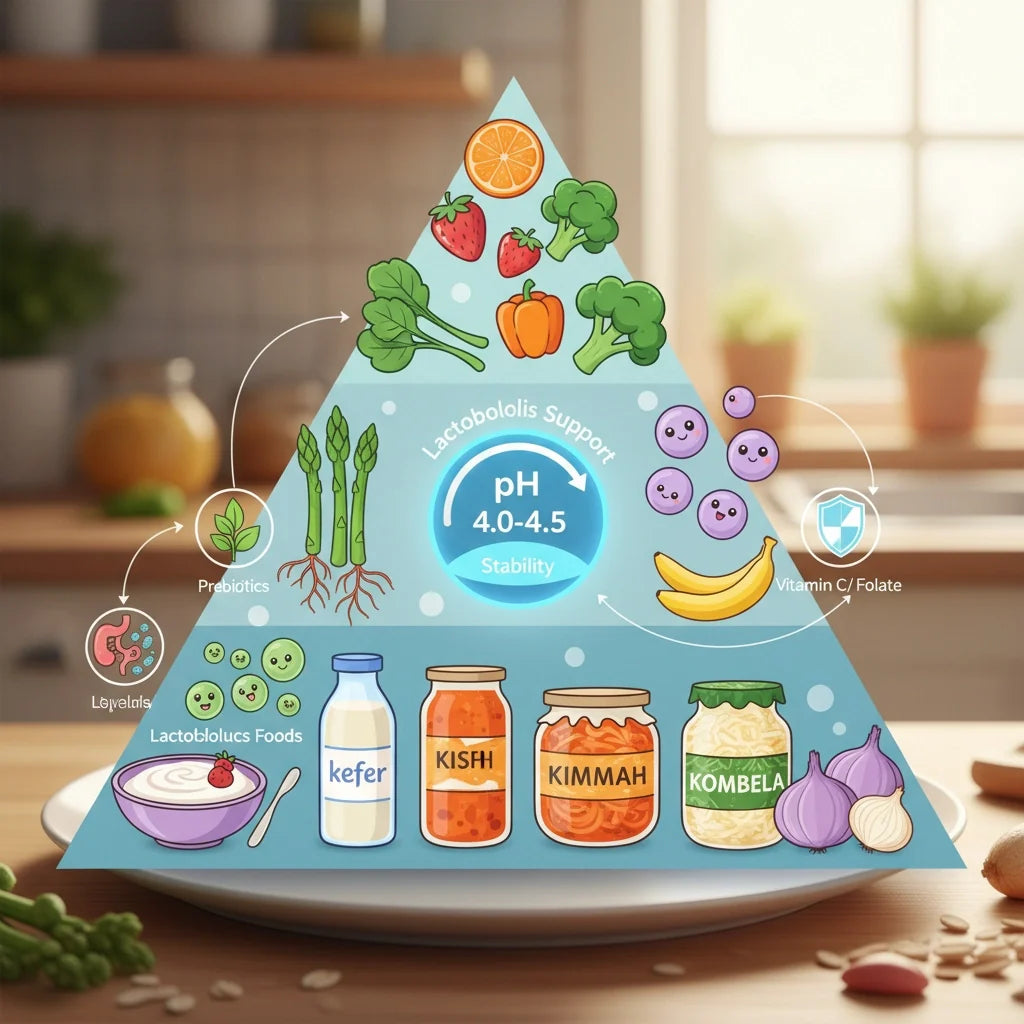
Diet influences vaginal health through the gut-vaginal axis. Foods rich in prebiotics (fiber that feeds beneficial bacteria) support overall microbial balance. Fermented foods like yogurt, kefir, and kimchi provide beneficial bacteria. Adequate hydration supports mucous membrane health.
Hygiene Practices That Protect pH
The vagina is self-cleaning; aggressive hygiene disrupts natural balance. Avoid douching (raises pH and depletes Lactobacillus), use fragrance-free, pH-balanced cleansers for external areas only, choose breathable cotton underwear, and change out of wet clothing promptly to prevent moisture-related pH shifts.
Managing Antibiotic Impact
Antibiotics, while necessary for bacterial infections, can deplete vaginal Lactobacillus populations. Consider probiotic supplementation during and after antibiotic courses, allow adequate recovery time between antibiotic treatments when possible, and discuss targeted antibiotic selection with healthcare providers.

When to Seek Professional Guidance
While understanding vaginal pH and Lactobacillus empowers self-care, certain situations require medical evaluation. Recognizing these scenarios ensures timely, appropriate intervention.
Symptoms Requiring Medical Attention
Consult healthcare providers for: persistent unusual discharge (especially green, gray, or frothy), strong fishy odor, severe itching or burning, pelvic pain, bleeding between periods or after intercourse, recurring infections despite treatment, or symptoms that don't improve with over-the-counter approaches.
Testing and Diagnosis
Healthcare providers can perform vaginal pH testing, microscopy to identify bacterial populations, culture tests for specific pathogens, and molecular testing for comprehensive microbiome analysis. These tools provide precise diagnosis beyond symptom assessment alone.

Nulsee Glow's Approach to Women's Wellness
At Nulsee Glow, we understand that intimate wellness starts from within. Our women's probiotic formulations combine clinically studied Lactobacillus strains with prebiotic fiber to support vaginal and digestive health simultaneously, acknowledging the interconnected nature of your body's microbial ecosystems.
Science-Based Formulation Philosophy
Our products feature multi-strain formulations including L. rhamnosus and L. reuteri, complemented by Fibersol-2 prebiotic fiber. This combination supports both gut and vaginal microbiome balance, recognizing that digestive health influences intimate wellness through the gut-vaginal axis.
Quality and Transparency Standards
Every Nulsee Glow supplement adheres to food-grade safety standards, contains clearly labeled strain-specific probiotics with guaranteed CFU counts, and undergoes third-party testing for purity and potency. We believe informed consumers make empowered health decisions.
FAQ: Your Questions About Vaginal pH and Lactobacillus Answered
Q1: What is the normal vaginal pH for adult women?
A: Healthy adult women typically maintain vaginal pH between 3.8 and 4.5. This acidic environment supports beneficial Lactobacillus bacteria while inhibiting pathogen growth.
Q2: How do Lactobacillus bacteria lower vaginal pH?
A: Lactobacillus species metabolize glycogen from vaginal epithelial cells into lactic acid. This lactic acid production directly lowers pH, creating the protective acidic environment characteristic of healthy vaginas.
Q3: Can probiotics really improve vaginal health?
A: Yes, clinical research demonstrates that specific Lactobacillus strains (particularly L. crispatus, L. rhamnosus, and L. reuteri) can colonize the vaginal environment, restore pH balance, and reduce bacterial vaginosis recurrence when taken consistently.
Q4: How long does it take for probiotics to affect vaginal pH?
A: Individual responses vary, but clinical studies typically show measurable changes in vaginal microbiome composition within 2-4 weeks of consistent probiotic use. Full colonization and pH stabilization may take 4-8 weeks.
Q5: Are oral probiotics as effective as vaginal suppositories?
A: Both delivery methods show efficacy in research. Oral probiotics must survive digestive transit but offer systemic benefits through the gut-vaginal axis. Vaginal suppositories provide direct colonization. Choice depends on individual preferences and specific health goals.
Q6: What lifestyle habits disrupt vaginal pH?
A: Common disruptors include douching, scented hygiene products, tight synthetic underwear, excessive sugar consumption, chronic stress, inadequate sleep, and antibiotic use without probiotic support.
Q7: Should I check my vaginal pH at home?
A: Home pH test strips are available and can provide useful information. Normal readings between 3.8-4.5 suggest healthy balance. However, elevated pH alone doesn't diagnose specific conditions—consult healthcare providers for persistent concerns.
Q8: Does diet affect vaginal pH?
A: Indirectly, yes. Diet influences gut microbiome health, which communicates with vaginal microbiome through the gut-vaginal axis. High-sugar diets may promote yeast overgrowth, while fiber-rich diets support beneficial bacteria throughout the body.
Key Takeaways
Vaginal pH and Lactobacillus bacteria form an intricate partnership essential for women's intimate health. Maintaining the naturally acidic vaginal environment (pH 3.8-4.5) depends on robust Lactobacillus populations that produce lactic acid as their primary protective mechanism.
Understanding this relationship empowers women to make informed decisions about hygiene practices, probiotic supplementation, and lifestyle factors that support microbiome balance. While the vagina possesses remarkable self-regulating capabilities, modern life presents challenges—from antibiotic use to stress—that can disrupt this delicate ecosystem.
Evidence-based approaches, including targeted probiotic supplementation with strains like L. crispatus and L. rhamnosus, combined with pH-friendly hygiene practices and nutritional support, offer practical pathways to maintaining vaginal wellness throughout life's hormonal transitions.
At Nulsee Glow, we're committed to supporting your wellness journey with science-backed, food-grade nutritional supplements designed to work with your body's natural protective mechanisms—because optimal health begins with balance from within.
References & Further Reading
Related post
RECENT POSTS