What Strain-Specific Evidence Means for Carb Balance Users
Why Strain-Specific Evidence Matters in Probiotic Research
When shopping for probiotics, you've likely noticed labels listing bacterial names like Lactobacillus or Bifidobacterium. But here's what most consumers don't realize: not all probiotic strains work the same way, even within the same species. This concept, called "strain specificity," is the cornerstone of evidence-based probiotic science.
Think of probiotic strains like dog breeds. While all dogs belong to the same species (Canis familiaris), a Golden Retriever behaves very differently from a Chihuahua. Similarly, Lactobacillus acidophilus La-5 functions differently than Lactobacillus acidophilus CL1285, even though they share the same genus and species names.

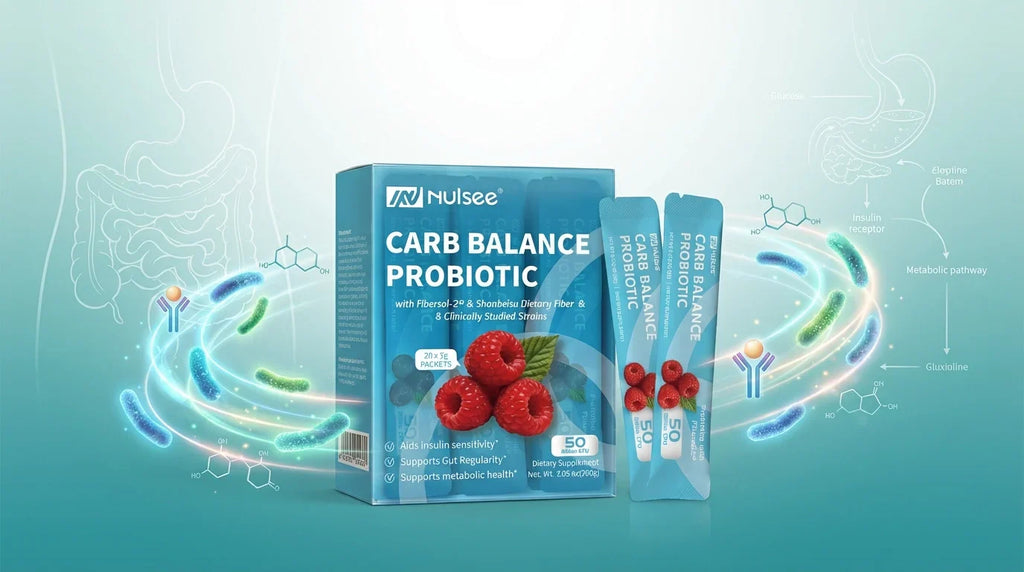
For Nulsee Carb Balance users, this distinction is crucial. Our formula features specific probiotic strains selected for their documented effects on glucose metabolism and gut health. Understanding strain-specific evidence helps you recognize why certain probiotics can support carbohydrate balance while others cannot.
Recent systematic reviews published in Frontiers in Medicine analyzed 228 randomized controlled trials and confirmed that probiotic efficacy is both strain-specific and disease-specific. This means the health benefits you seek depend entirely on which exact strain you consume, not just the genus or species name on the label.
Decoding Probiotic Nomenclature: Understanding the Three-Level System
Before diving into research papers, you need to understand how scientists name probiotics. The naming system follows a strict hierarchy: Genus → Species → Strain.
Let's break down this nomenclature using an example from Nulsee Carb Balance:
- Genus: Bifidobacterium (the broad bacterial family)
- Species: longum (a specific type within that family)
- Strain: CECT 7347 (the unique identifier for this specific bacterial culture)
The strain designation is the most critical component. This alphanumeric code (like CL1285, GG, or La-5) identifies the exact bacterial culture used in clinical studies. When reading research, always look for this strain identifier. Studies testing Lactobacillus rhamnosus GG cannot be applied to Lactobacillus rhamnosus R011—they're different strains with potentially different effects.

According to the International Scientific Association for Probiotics and Prebiotics, probiotic labels should clearly state all three levels of identification. Products listing only genus names (like "contains Lactobacillus") provide insufficient information for evaluating scientific evidence.
Table 1: Understanding Probiotic Naming Conventions
| Level | Example 1 | Example 2 | Function |
|---|---|---|---|
| Genus | Lactobacillus | Bifidobacterium | Broad bacterial family classification |
| Species | acidophilus | animalis | Specific type within genus |
| Strain | CL1285 | Bb-12 | Unique identifier linked to clinical studies |
| Full Name | Lactobacillus acidophilus CL1285 | Bifidobacterium animalis Bb-12 | Complete identification for research verification |
This three-level system ensures that when you read "clinically proven," you can verify which exact strain was studied and whether that strain matches what's in your supplement.
How to Read Clinical Studies: Key Sections That Matter
Scientific papers can seem intimidating, but you don't need a PhD to extract valuable information. Focus on these four essential sections when evaluating probiotic research:
The Abstract: Your 5-Minute Research Summary
The abstract provides a condensed overview of the entire study. Look for:
- Objective: What question did researchers try to answer?
- Methods: How many participants? What probiotic strains and doses?
- Results: Did the probiotic show statistically significant effects?
- Conclusion: What do findings mean for real-world applications?
A recent study inAdvances in Nutrition examining probiotic effects in healthy populations demonstrates this structure perfectly. The abstract clearly states which strains were studied and which health outcomes showed significant improvement.

Materials and Methods: Verifying Strain Identity
This section reveals critical details about the probiotic tested. Check for:
- Complete strain designations (not just genus/species)
- Dosage measured in CFU (colony-forming units)
- Duration of intervention
- Participant characteristics (age, health status, diet)
Results: Understanding Statistical Significance
Numbers don't lie, but they need context. Key terms to understand:
- P-value: Values below 0.05 generally indicate statistically significant results
- Confidence intervals: Ranges showing result reliability
- Effect size: The magnitude of improvement observed
Discussion and Limitations: The Reality Check
Honest researchers acknowledge their study's limitations. This section helps you understand:
- Whether results apply to your specific situation
- What factors might influence outcomes
- What questions remain unanswered
Strain Specificity and Glucose Metabolism: What Research Shows
For Carb Balance users interested in glucose support, strain-specific research reveals fascinating insights. Not all probiotic strains affect glucose metabolism equally.
A comprehensive scoping review inNutrients examining probiotic mechanisms affecting glucose homeostasis found that effectiveness is highly strain-dependent. While some Lactobacillus strains significantly improved fasting plasma glucose and insulin sensitivity, others showed no effect.

Consider these documented examples:
Glucose-Supporting Strains:
- Lactobacillus plantarum OLL2712 reduced fasting glucose and improved insulin resistance in pre-diabetic patients
- Bifidobacterium longum APC1472 decreased postprandial glucose responses in healthy overweight individuals
- Multi-strain formulations containing L. acidophilus CL1285 demonstrated significant improvements in HOMA-IR (insulin resistance marker)
Strains Without Glucose Effects:
- Some widely marketed probiotic strains showed no significant impact on glucose parameters
- Single-species formulations often underperformed compared to multi-strain combinations
This research explains why Nulsee Carb Balance combines multiple probiotic strains rather than relying on a single species. Synergistic effects between strains can enhance overall metabolic support.
The Role of Fibersol-2®: When Fiber Meets Probiotics
Nulsee Carb Balance pairs probiotic strains with Fibersol-2®, a patented soluble corn fiber. Understanding this combination requires looking at how fiber and probiotics work together.

Clinical studies on Fibersol-2® demonstrate its unique properties:
- Research published inNutrients showed that replacing 50% of carbohydrates with soluble corn fiber significantly reduced glycemic and insulin responses
- The prebiotic effects of Fibersol-2® selectively feed beneficial gut bacteria, amplifying probiotic effectiveness
- Unlike other fibers, Fibersol-2® produces minimal digestive discomfort while supporting metabolic health
Table 2: Fibersol-2® Clinical Evidence for Glucose Support
| Study Parameter | Dose | Duration | Key Finding | Reference |
|---|---|---|---|---|
| Postprandial glucose | 4-6g | Single meal | Reduced blood sugar spikes by 30% | Functional Foods in Health & Disease |
| Satiety hormones | 10g | 6 weeks | Increased PYY and GLP-1 levels | Nutrition Journal |
| Fasting glucose | 5g daily | 12 weeks | Improved fasting glucose in pre-diabetics | Journal of Nutrition |
| HbA1c levels | 6g daily | 16 weeks | Modest reduction in long-term glucose markers | ADM Clinical Data |
The combination of specific probiotic strains with Fibersol-2® creates a synergistic effect. Probiotics modulate gut microbiota composition, while soluble fiber provides:
- Slow glucose absorption from the digestive tract
- Sustained prebiotic fuel for beneficial bacteria
- Enhanced production of short-chain fatty acids (SCFAs) that support metabolic health
Red Flags in Probiotic Research: What to Watch Out For
Not all probiotic studies are created equal. Learning to spot questionable research protects you from misleading marketing claims.

Warning Sign 1: Missing Strain Designations
If a study or product mentions only "Lactobacillus blend" without specific strains, proceed with caution. Systematic reviews consistently show that pooling different strains in analysis produces unreliable conclusions.
Warning Sign 2: Inappropriate Strain Grouping
Some meta-analyses incorrectly combine different strains as if they're interchangeable. A 2018 analysis revealed that when studies properly separated probiotic strains into specific subgroups, only certain strains showed significant efficacy—contradicting the original pooled results.
Warning Sign 3: Small Sample Sizes Without Replication
A single study with 20 participants isn't enough. Look for:
- Multiple independent studies testing the same strain
- Adequate participant numbers (typically 50+)
- Replication of results by different research teams
Warning Sign 4: Conflicts of Interest Not Disclosed
Reputable studies transparently disclose funding sources and potential conflicts. While industry-sponsored research isn't inherently problematic, undisclosed financial relationships raise ethical concerns.
Applying Research to Your Daily Routine: Practical Guidance
Understanding strain-specific evidence empowers better decisions about your gut health regimen. Here's how to apply this knowledge:

Step 1: Verify Strain Identity Check that your probiotic supplement lists complete strain designations. Nulsee Carb Balance transparently provides full strain information for each probiotic included.
Step 2: Match Strains to Your Health Goals Different strains support different outcomes. For glucose metabolism and digestive balance, look for evidence supporting those specific endpoints.
Step 3: Consider Dosage and Formulation Clinical studies use specific CFU counts. Compare your supplement's dosage to studied amounts. Nulsee Carb Balance delivers probiotic concentrations aligned with research protocols.
Step 4: Combine with Appropriate Fiber Research shows prebiotics enhance probiotic effectiveness. The Fibersol-2® in Carb Balance provides clinically studied fiber support.
Step 5: Allow Adequate Time Most probiotic studies show effects after 4-12 weeks of consistent use. Patience and consistency matter more than immediate results.
Beyond Glucose: Other Researched Benefits of Specific Strains
While Carb Balance focuses on glucose metabolism support, the probiotic strains included show evidence for additional health benefits:

Digestive Function: Clinical trials demonstrate that specific strains in multi-strain formulations support regular bowel movements and reduce occasional digestive discomfort.
Immune Modulation: Research indicates certain probiotic strains interact with gut-associated lymphoid tissue (GALT), potentially supporting immune system balance.
Metabolic Health Markers: Studies show some strains influence lipid profiles, inflammatory markers, and other metabolic parameters beyond glucose alone.
Weight Management Support: Evidence suggests particular strains may help with body composition when combined with balanced nutrition and physical activity.
Understanding strain-specific evidence helps you appreciate that probiotics are precise tools, not general cure-alls. The right strains for the right purpose matter immensely.
The Future of Personalized Probiotic Science
Probiotic research continues evolving toward personalization. Emerging areas include:
Microbiome Testing: Advanced sequencing technologies now identify individual gut bacteria populations, potentially guiding customized probiotic selections.
Metabolomic Analysis: Researchers are mapping how specific strains produce metabolites that influence host metabolism, including glucose regulation pathways.
Host-Microbe Interactions: Studies increasingly examine how individual genetics influence probiotic responses, explaining why strain effects vary between people.
Synbiotic Formulations: The next generation combines specific prebiotics with matched probiotic strains for enhanced effectiveness—exactly the approach Nulsee Carb Balance employs with Fibersol-2®.

As science advances, the importance of strain-specific evidence becomes even clearer. Generic "probiotic blends" will likely give way to precisely formulated supplements backed by robust clinical evidence.
Making Informed Choices: Your Probiotic Research Checklist
Use this checklist when evaluating probiotic products and their supporting science:
✅ Complete strain designations provided (genus, species, strain code) ✅ Published clinical studies available for review ✅ Appropriate study populations matching your health status ✅ Adequate sample sizes and study duration ✅ Statistically significant results (p < 0.05) ✅ Transparent manufacturing and quality testing ✅ Appropriate CFU counts aligned with research ✅ Proper storage conditions specified ✅ Clear dosage instructions based on evidence ✅ Realistic claims supported by documented outcomes
Nulsee Carb Balance meets these criteria, providing transparency about strain selection, clinical evidence, and formulation rationale.

FAQ: Common Questions About Probiotic Research and Strain Specificity
Q: Do I need to check research for every probiotic I consider? A: While checking research is ideal, look for products from reputable companies that transparently share strain information and clinical evidence. Trustworthy manufacturers do this work for consumers.
Q: Can I substitute one Lactobacillus strain for another? A: No. Even within the same species, different strains have distinct genetic profiles and functions. Strain specificity means you cannot assume interchangeability.
Q: How many CFUs do I need for glucose support? A: Clinical studies use varying amounts, typically 1-10 billion CFU daily. Consistency matters more than extremely high counts. Nulsee Carb Balance provides researched dosing ranges.
Q: Do probiotics work the same for everyone? A: Individual responses vary based on existing gut microbiota, diet, medications, and genetics. Strain-specific evidence shows average effects across populations, but personal experiences differ.
Q: Should I take probiotics with or without food? A: This depends on the specific strain. Follow product instructions, as some strains show better survival with food while others work best on an empty stomach.
Q: How long do probiotic effects last? A: Most probiotic benefits require ongoing supplementation. Once you stop taking them, bacterial populations typically return to baseline within weeks, though some metabolic improvements may persist longer.
Q: Can I trust studies funded by supplement companies? A: Industry-funded research isn't automatically invalid, but look for independent replication and peer-reviewed publication. Disclosure of funding sources indicates transparency.
Q: What's the difference between prebiotics and probiotics? A: Probiotics are live beneficial bacteria; prebiotics are fibers that feed those bacteria. Nulsee Carb Balance combines both (synbiotic approach) with Fibersol-2® supporting probiotic strains.
Q: Do "billion CFUs" really matter? A: CFU count matters, but strain identity matters more. A lower dose of the right strain outperforms a higher dose of an ineffective one. Quality over quantity applies to probiotics.
Q: How do I know if Carb Balance strains are right for me? A: If you're seeking daily support for glucose metabolism and digestive balance, the evidence-based strains in Carb Balance align with those goals. Consult your healthcare provider about your specific health situation.
Conclusion: Empowered Choices Through Scientific Literacy
Understanding strain-specific probiotic evidence transforms you from a passive consumer into an informed decision-maker. When you know how to read research, verify strain identities, and evaluate clinical claims, you can confidently choose supplements that align with your health goals.
Nulsee Carb Balance exemplifies evidence-based formulation, combining specific probiotic strains with documented glucose metabolism support alongside Fibersol-2® prebiotic fiber. This synbiotic approach reflects current scientific understanding that optimal results come from precise combinations rather than generic probiotic blends.
As probiotic science continues advancing, your ability to interpret research ensures you benefit from the latest discoveries while avoiding misleading marketing. The future of gut health and metabolic support lies in personalized, strain-specific approaches backed by rigorous clinical evidence.
Ready to experience the difference that evidence-based probiotic selection makes? Explore Nulsee Carb Balance and discover how strain-specific science supports your daily wellness journey.
References:
- Frontiers in Medicine - Strain-Specificity and Disease-Specificity of Probiotic Efficacy
- Advances in Nutrition - Is There Evidence to Support Probiotic Use for Healthy People?
- Nutrients - Probiotic Mechanisms Affecting Glucose Homeostasis: A Scoping Review
- ISAPP - Decoding a Probiotic Product Label
- Nutrients - The Role of Soluble Corn Fiber on Glycemic and Insulin Response
FDA Disclaimer: The statements in this article have not been evaluated by the Food and Drug Administration. Products containing soluble corn fiber are not intended to diagnose, treat, cure, or prevent any disease. Always consult with a healthcare professional before starting any new dietary supplement regimen.
Related post

RECENT POSTS